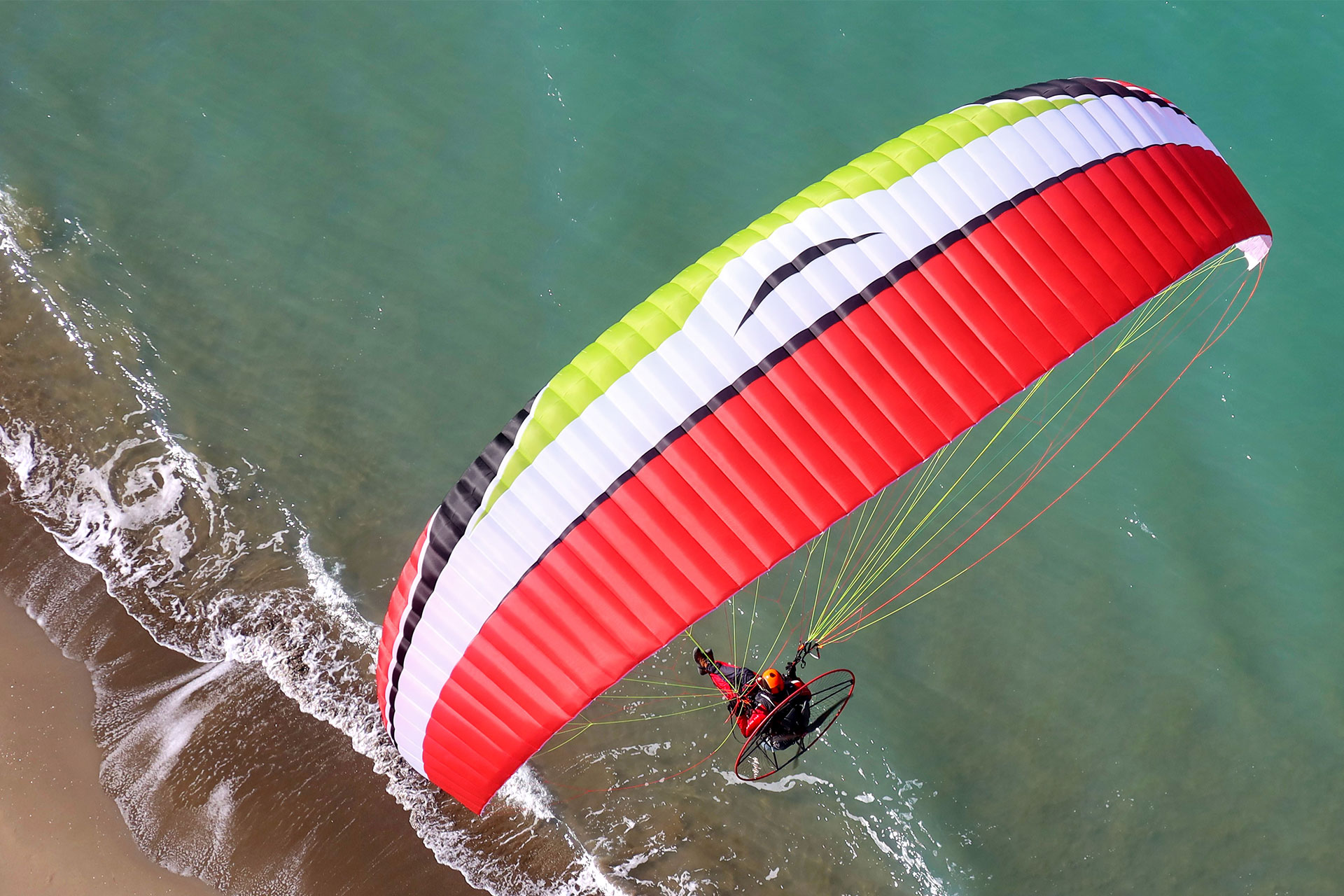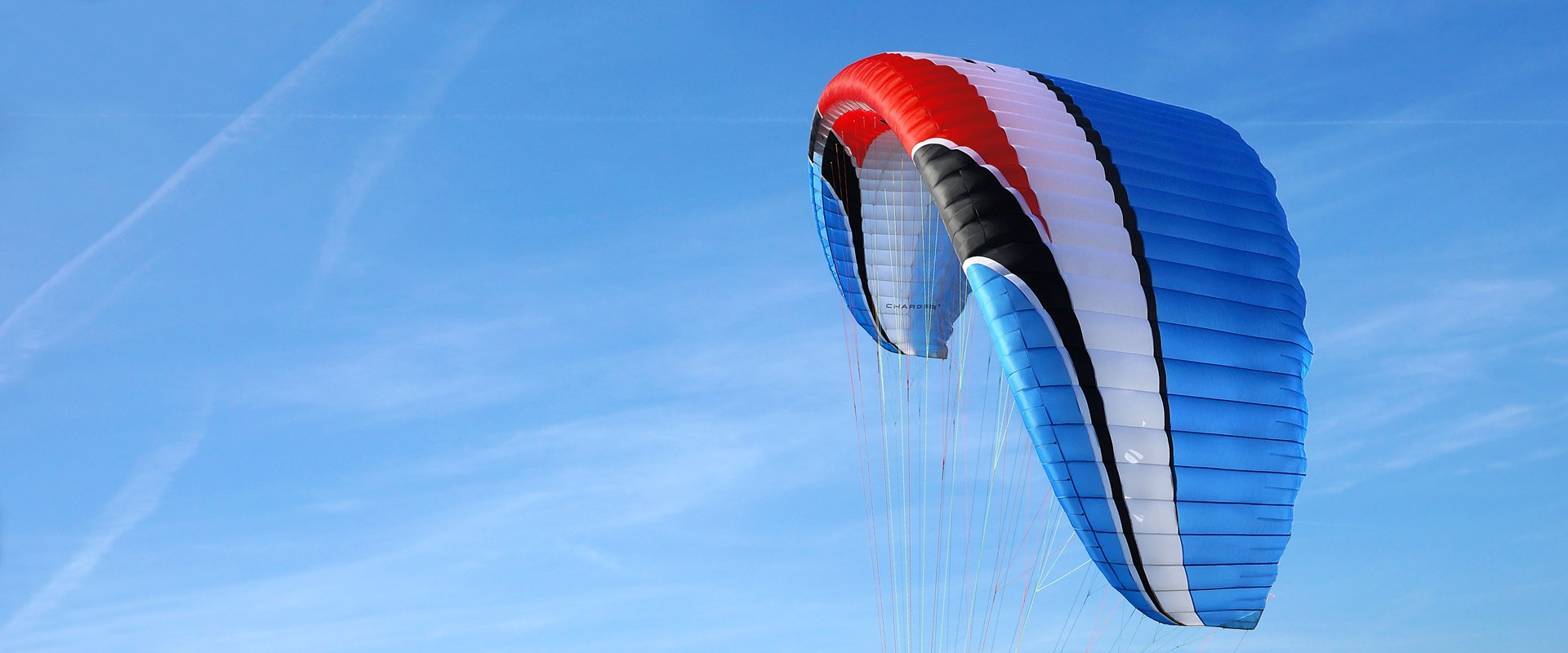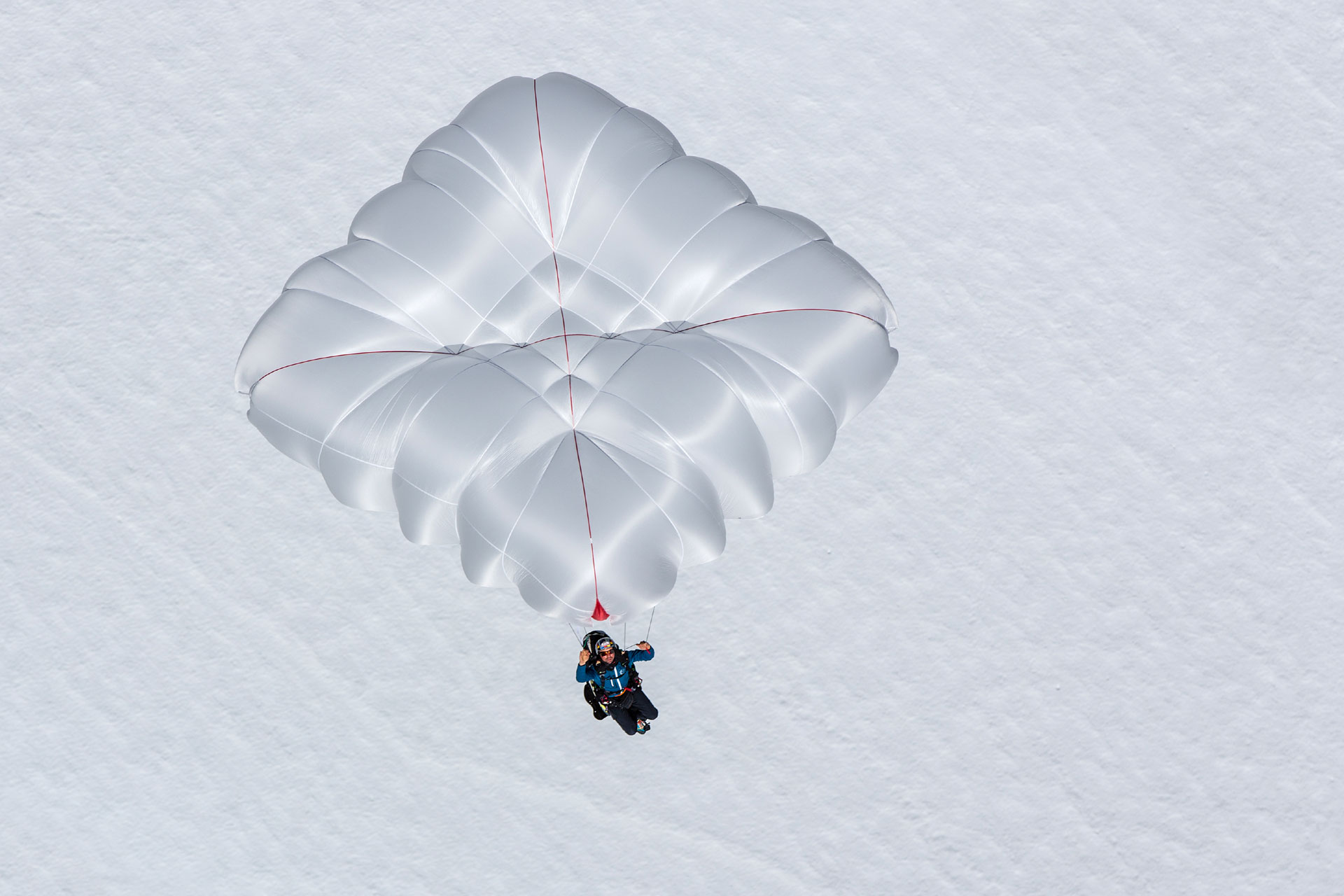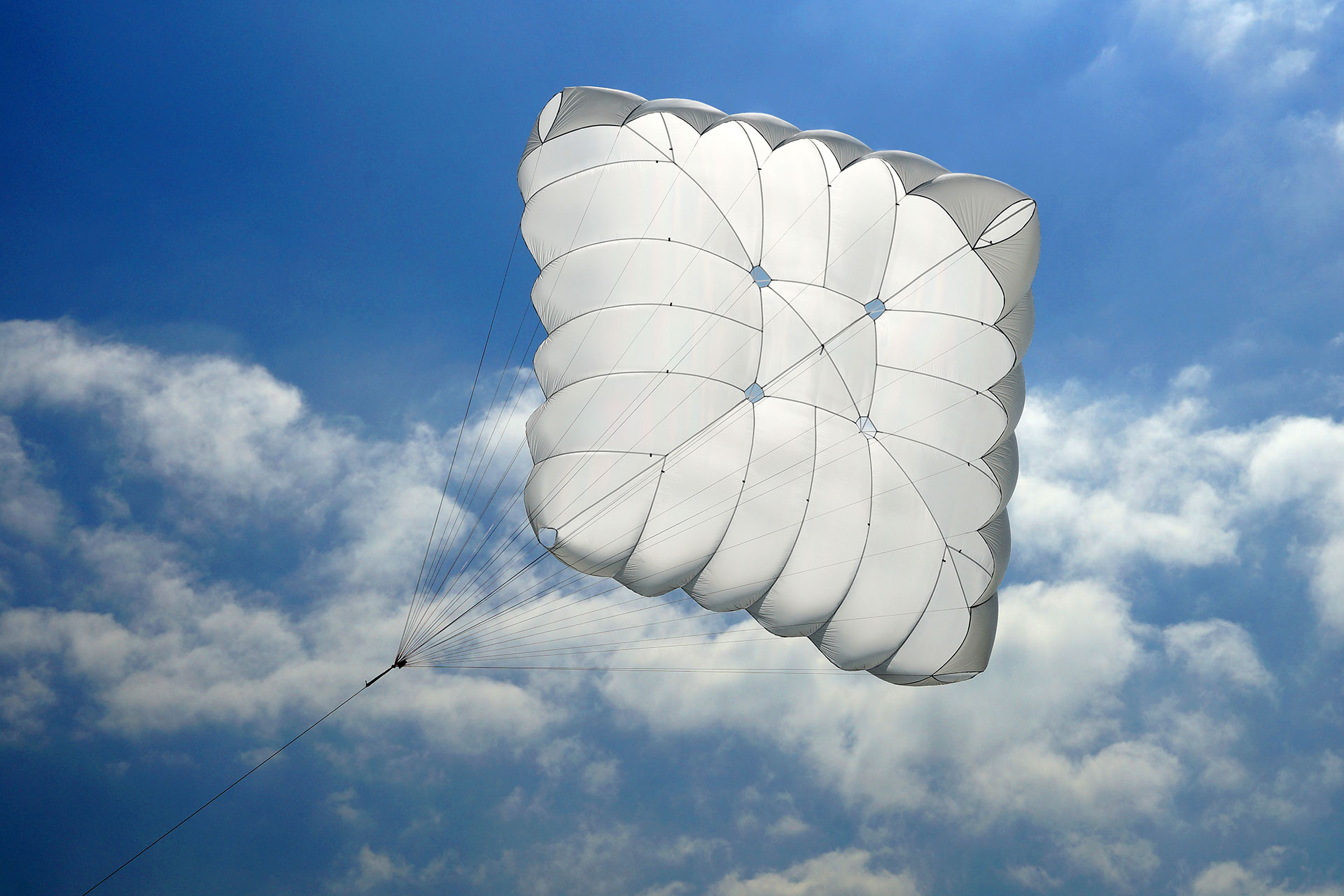

The Charger 3 is a reflex paramotoring glider designed for a wide range of pilots, from beginners and recreational pilots to advanced and experienced PPG professionals. It will delight anyone looking for a comfortable and reliable partner for powered excursions. Easy take-offs and landings, exceptional stability, and good cruising speed are the features that make Chargers very popular and have earned them an exceptional reputation in the world of powered paragliding.
Easy launches are a hallmark of MAC PARA gliders—a feature we place extraordinary emphasis on during development. The inflation of the Charger 3 canopy is smooth with a quick rise. Once inflated, the canopy holds steady above the head without a tendency to overshoot or fall back. During the take-off run, the pilot clearly feels the increase in lift needed to leave the ground; a subsequent light pull on the brakes lifts the pilot into the third dimension without any "sagging." The lift rate is pleasantly readable as you accelerate and easily controlled via the brakes. The take-off distance is very similar to paragliders with a classic profile.
The Charger 3 is easy to handle both on the ground and in the air. The new 2D steering system allows for sportier and more precise control. Its simplicity and safety will be appreciated by demanding pilots looking for a stable reflex glider with a wide speed range, high collapse resistance, and immediate response to steering inputs.
With standard brake travel, the control is almost identical to the previous model. By pulling the toggles toward the body, the pilot increases turn dynamics. You will get the hang of it quickly during your very first flights.
Thanks to its auto-stable reflex profile, the glider provides extraordinary peace of mind during flight. It is undemanding to pilot and resistant to collapses even in active air. The profile used offers great performance and high stability. A smooth leading edge and aerodynamic purity are achieved through quality craftsmanship and a combination of Mylar reinforcements and plastic rods.
New to the Charger 3 is the RFE (Reinforced Front Edge) system, where rods are placed in the center of the cells. This system, proven in higher-category gliders, increases efficiency and penetration when flying against the wind or through turbulence.
The Charger 3 excels in stability across all axes throughout its entire weight and speed range. Roll oscillations are very well dampened! In the standard trim range, the glider is controlled using the main brakes. Moderate brake pressure allows for comfortable turning during long flights. Pressure increases progressively toward the end of the stroke, providing a safety margin against stalling.
When trims are fully released, brake pressure increases significantly. In this setting, the glider can be controlled via the wingtips using additional handles (WTST – Wingtip Steering). This method of directional control is a major advantage when using the speed system or flying with open trims. The landing flare is pleasantly definable with a good amount of lift before touchdown.
The elliptical canopy features 50 cells and an aspect ratio of 5.22. The construction of diagonal ribs and a system of load-bearing tapes ensures wing stability and helps maintain a clean canopy surface.

The weight of the Charger 3 has been reduced through the use of lighter materials. The weight of the medium size, including sophisticated risers with trims and auxiliary WTST toggles, is 5.5 kg.
Life isn't just about flying, but flying is one of its most pleasant parts. Chargers provide life energy and put smiles on pilots' faces.
The risers are equipped with trims and a speed system, allowing flight speed to be set according to pilot preference. With the trimmers tightened, the canopy’s behavior approaches that of conventional non-powered gliders. Loosening the trimmers significantly increases speed. During long flights in reflex mode, the wing can be controlled using small steering toggles that activate only the wingtips. This does not decrease flight speed, and the canopy remains in auto-stable mode during maneuvering. The WTST handles are ideally located near the main carabiners.
The Charger 3 comes standard with slim, semi-rigid handles. Each handle is equipped with a swivel and two neodymium magnets, making it easy to attach them to the D-risers during flight. The risers offer two pulley positions for low or high hang-point attachments. The WTST handles are kept in position by elastic cords and attached to the risers via neodymium magnets and press studs. The wingtips also feature small self-cleaning holes.
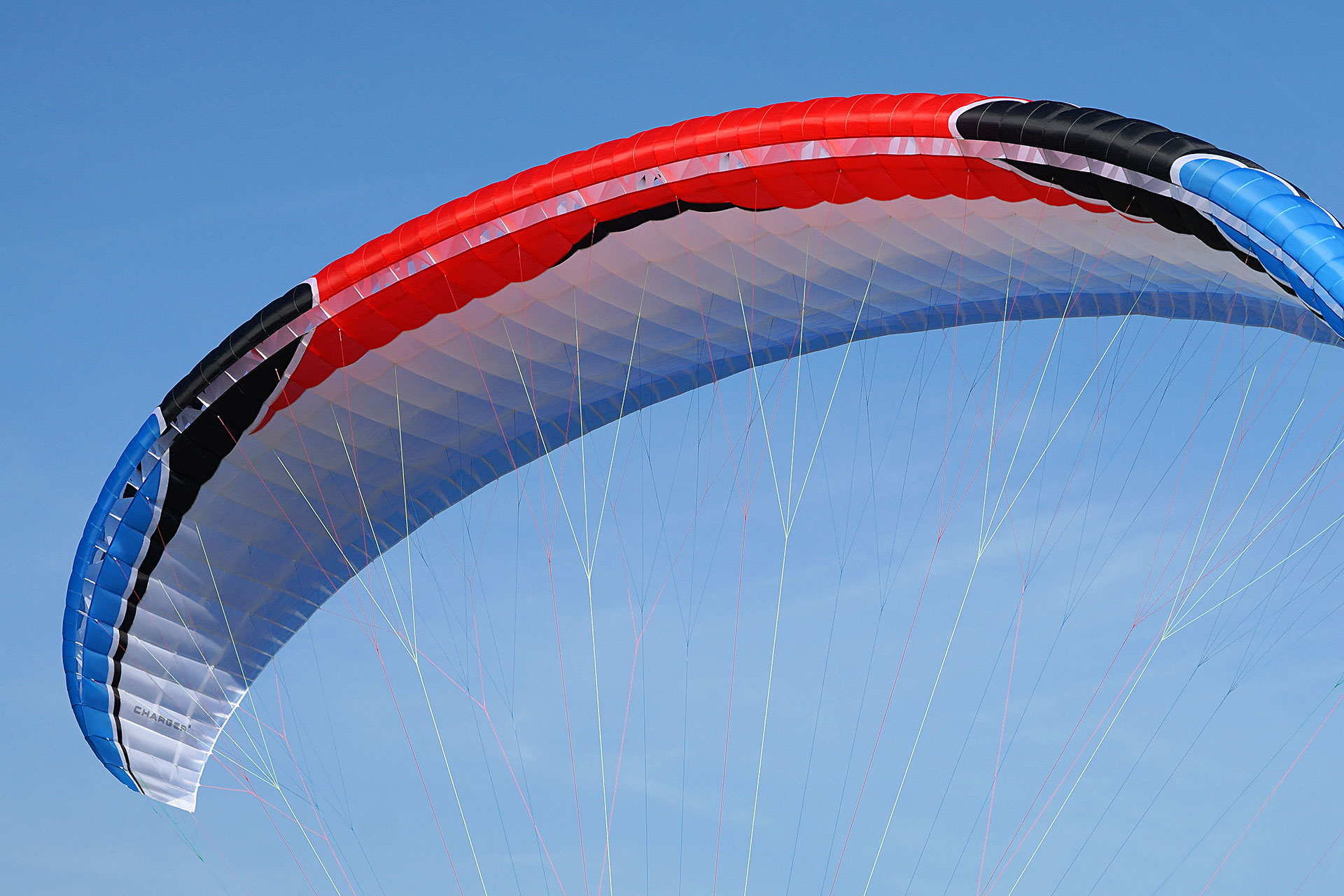
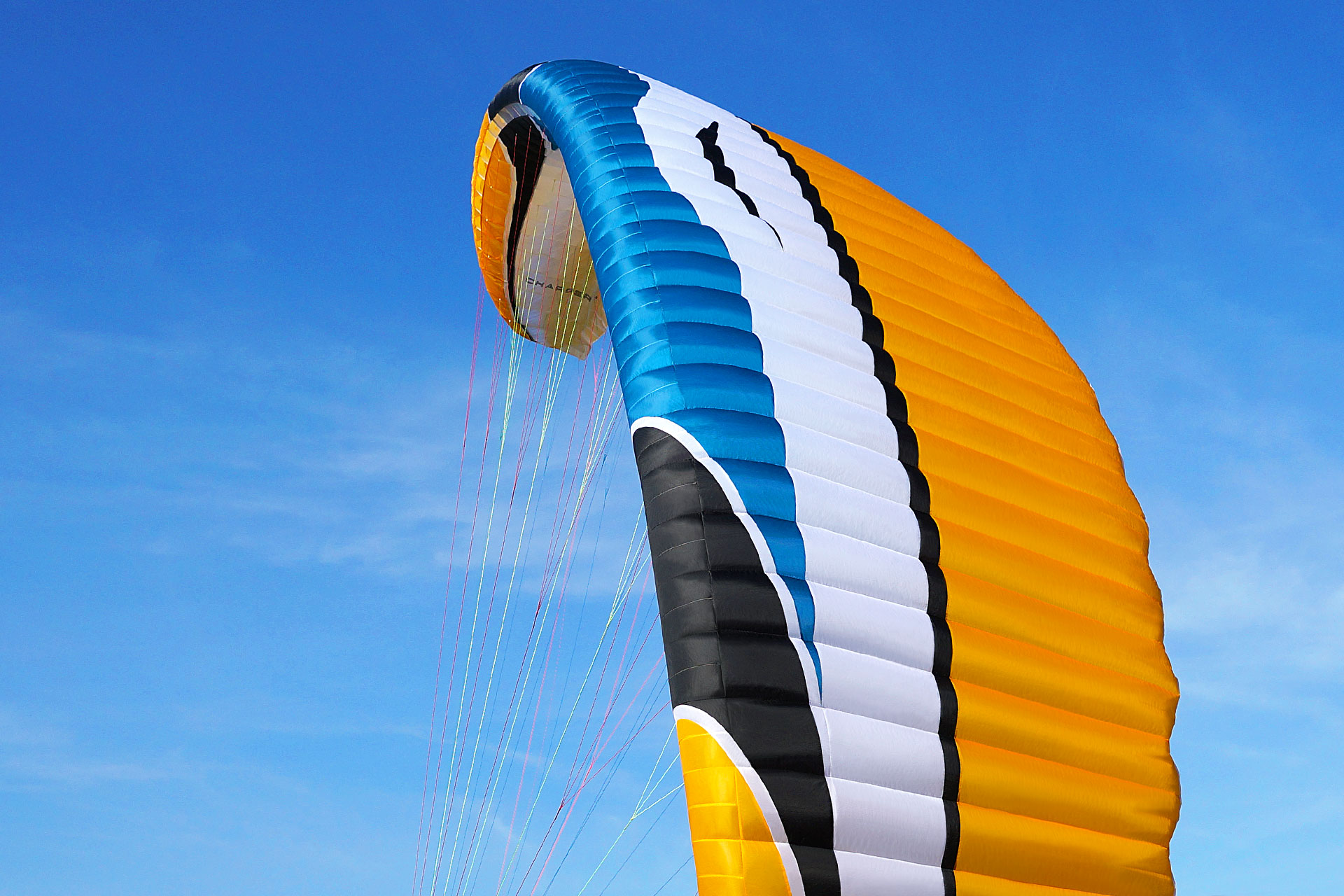
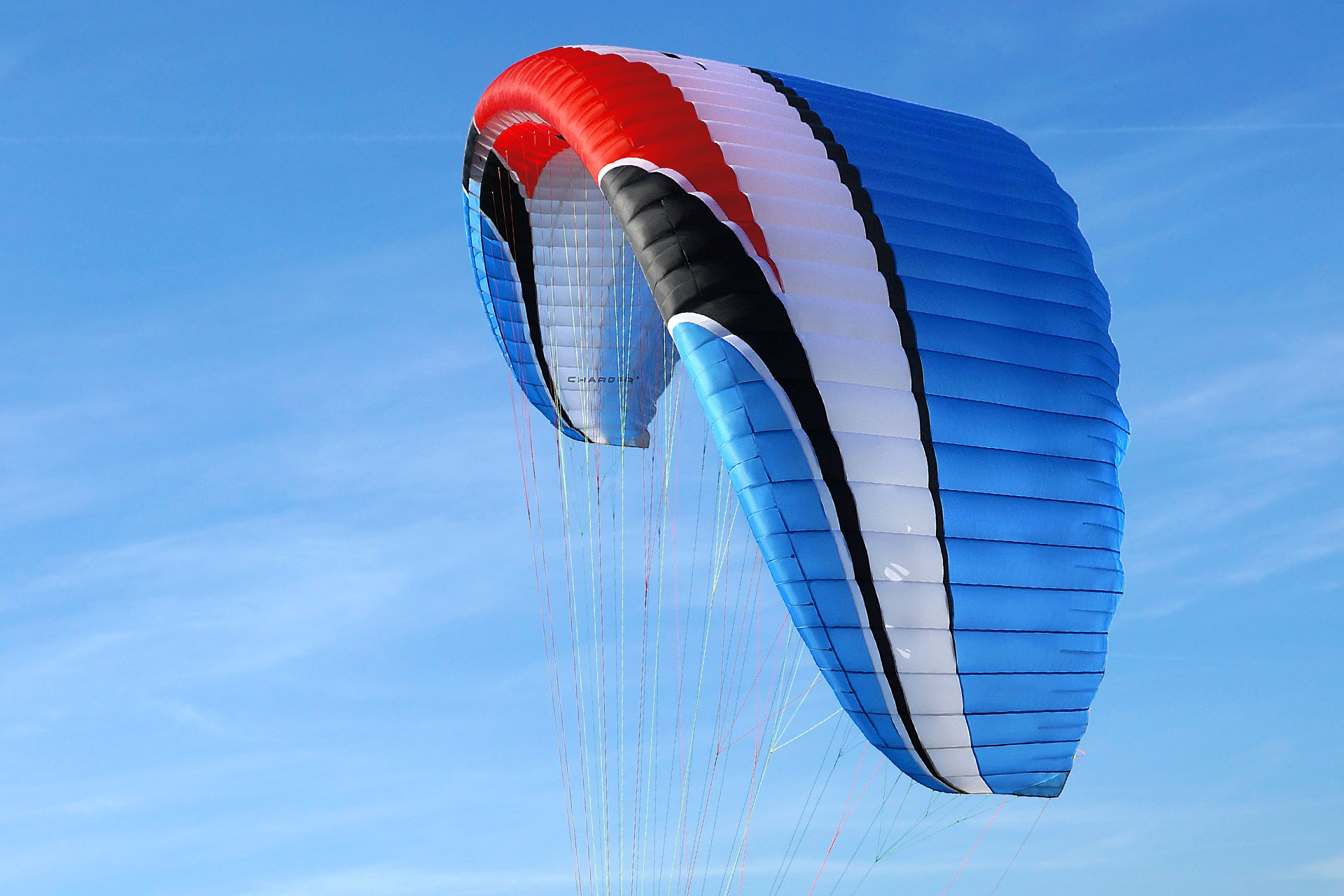
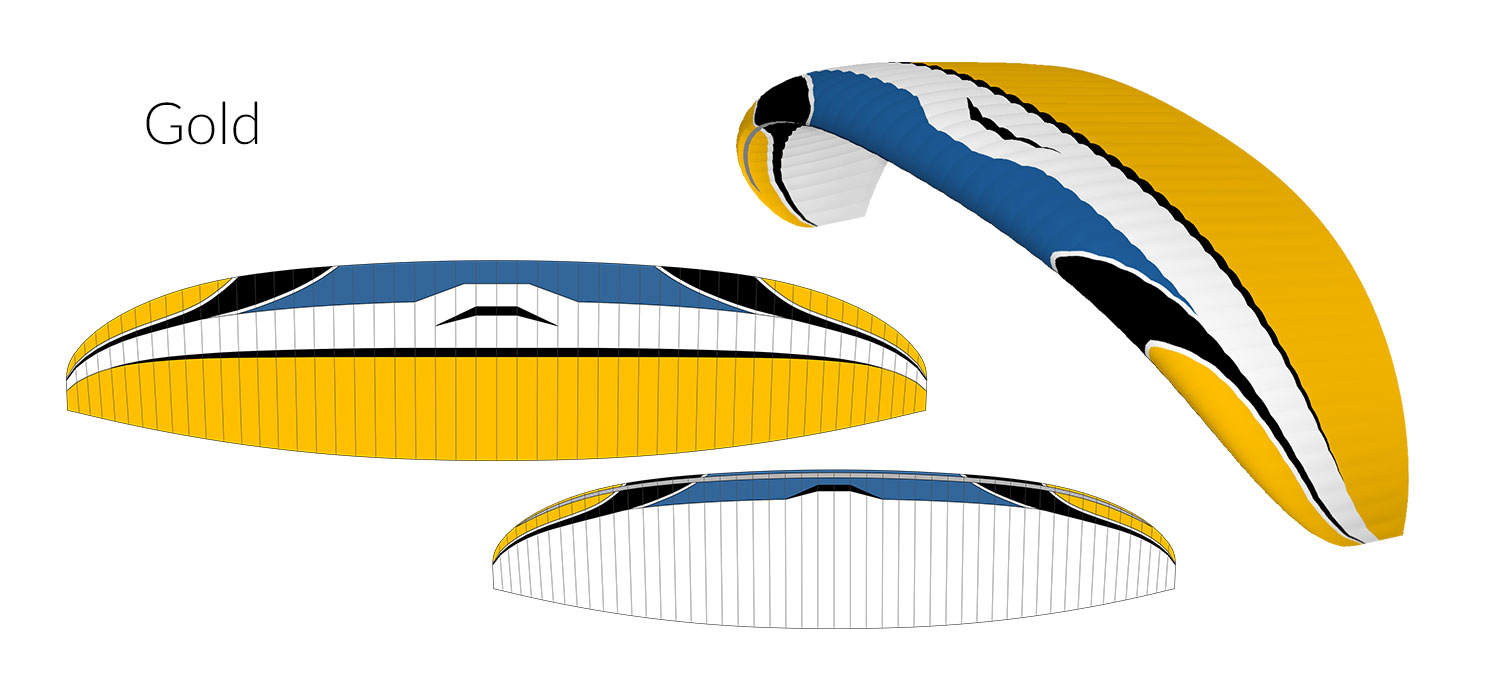
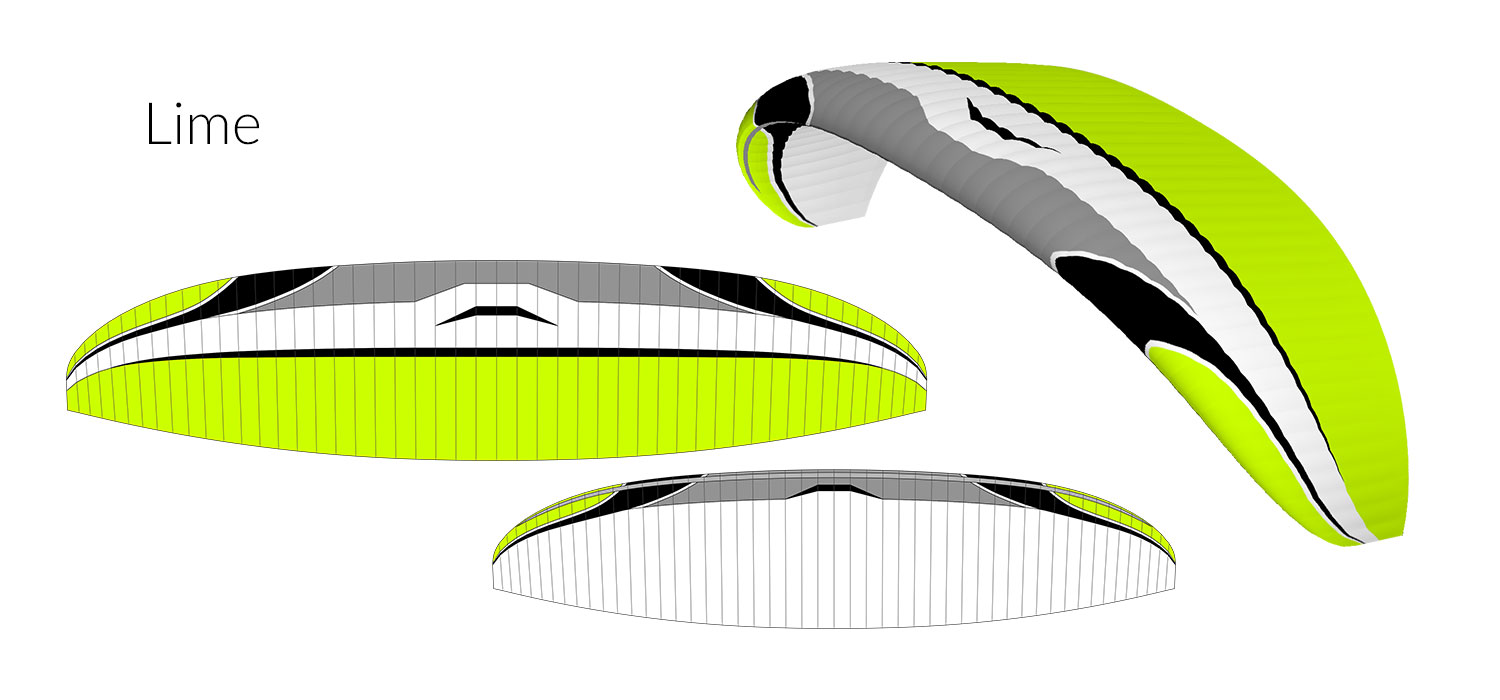
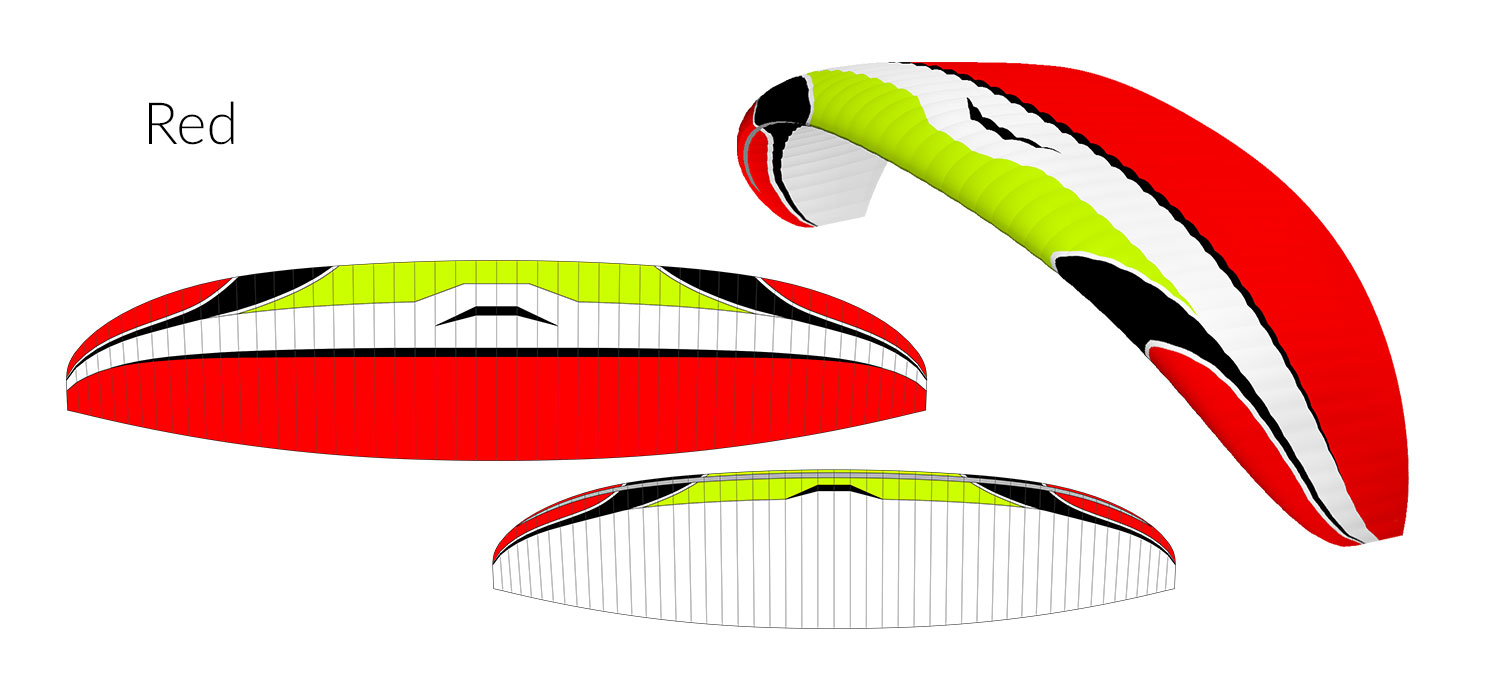
The Charger 3 features a modern, aggressive design. New color combinations make the glider unmistakable in the sky.
Using the best proven materials and maintaining constant quality control throughout the production process are prerequisites for our products. We use line series proven over years that guarantee the correct geometry of your canopy for its entire lifespan. Thanks to their flight characteristics and popularity, Chargers maintain a high utility value—and consequently, a high resale value.
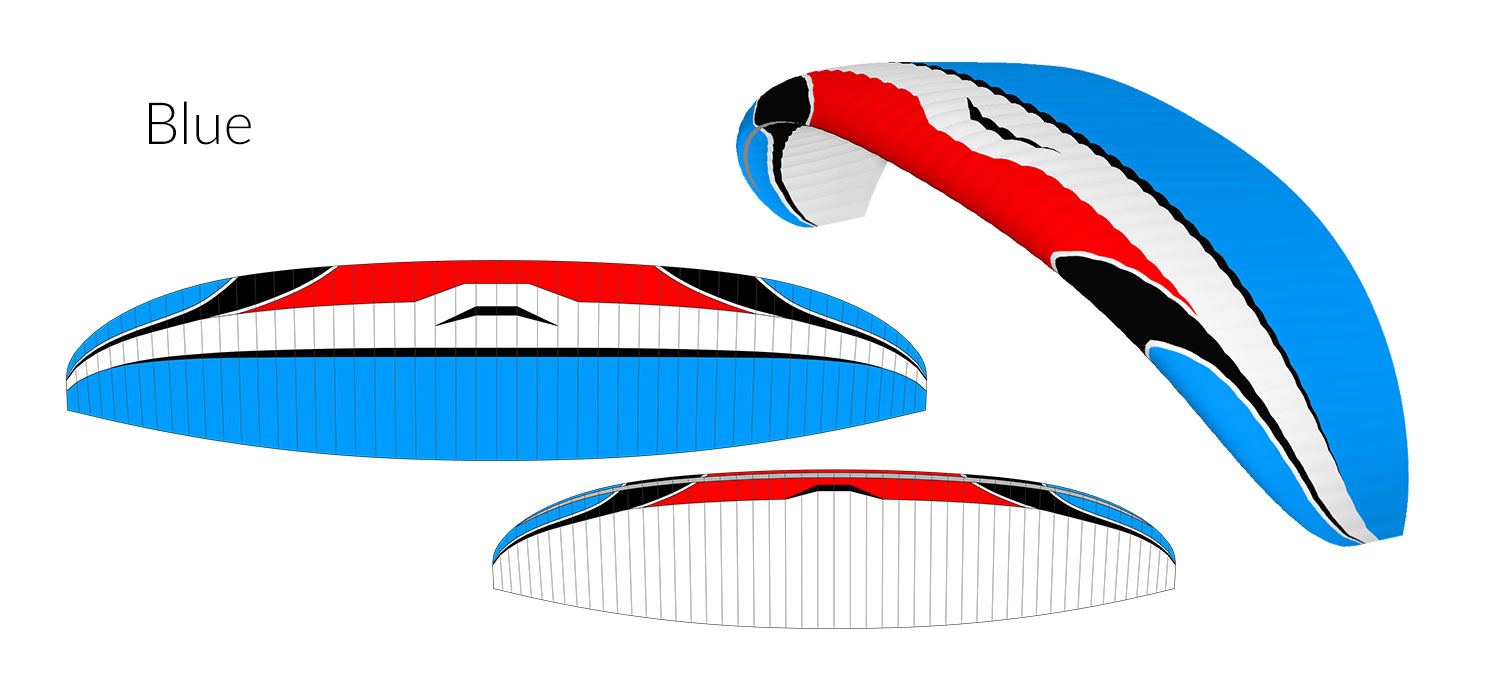
In addition to the correct size, you can choose from four stock designs: Blue, Red, Lime, and Gold. If you have a different vision, you can create your own custom design below. Please note that special designs come at an extra cost and colors are subject to fabric availability.
User-friendliness is one of the most important parameters for our R&D team, yet you won't find it in the technical data. That is what this glider is all about.
| Charger 3 | 18 (XXS) | 21 (XS) | 23 (S) | 25 (M) | 28 (L) | 31 (XL) | 34 (XXL) |
|---|---|---|---|---|---|---|---|
| Zoom [%] | 81.3 | 87.0 | 91.5 | 95.3 | 100 | 105.5 | 110.0 |
| Area in piano [m2] | 18.47 | 21.16 | 23.40 | 25.38 | 27.95 | 31.11 | 33.82 |
| Area proiettata [m2] | 16.44 | 18.82 | 20.82 | 22.59 | 24.87 | 27.68 | 30.09 |
| larghezza in piano [m] | 9.82 | 10.51 | 11.05 | 11.51 | 12.08 | 12.74 | 13.29 |
| Allungamento in piano | 5.22 | 5.22 | 5.22 | 5.22 | 5.22 | 5.22 | 5.22 |
| Corda alare [m] | 2.32 | 2.48 | 2.61 | 2.72 | 2.85 | 3.01 | 3.14 |
| Cassoni | 50 | 50 | 50 | 50 | 50 | 50 | 50 |
| Peso [kg] | 5.0 | 5.2 | 5.4 | 5.5 | 5.6 | 5.9 | 6.5 |
| Range di peso per volo PPG *[kg] | 75 - 115 | 85 - 120 | 95 - 130 | 102 - 140 | 110 - 160 | 130 - 180 | 140 - 240 |
|
Recommended weight range for foot launch * [kg] |
75 - 100 | 85 - 105 | 95 - 115 | 102 - 125 | 110 - 145 | 130 - 165 | 140 - 185 |
| Velocita minima [km/h] | 24 - 27 | 24 - 27 | 24 - 27 | 24 - 27 | 24 - 27 | 24 - 27 | 24 - 27 |
| Speed Trimmers closed [km/h] | 37 - 41 | 37 - 41 | 37 - 41 | 37 - 41 | 37 - 41 | 37 - 41 | 37 - 41 |
| Speed Trimmers open [km/h] | 47 - 51 | 47 - 51 | 47 - 51 | 47 - 51 | 47 - 51 | 47 - 51 | 47 - 51 |
| Velocita massima (acc.+Trim open)[km/h] | 57 - 61 | 57 - 61 | 57 - 61 | 57 - 61 | 57 - 61 | 57 - 61 | 57 - 61 |
| Efficienza | 9.5 | 9.5 | 9.5 | 9.5 | 9.5 | 9.5 | 9.5 |
| Tasso minimo di caduta[m/s] | 1.2 | 1.2 | 1.2 | 1.2 | 1.2 | 1.2 | 1.2 |
| Omologazione | DGAC | DGAC | DGAC | DGAC | DGAC | DGAC | DGAC |
|
* peso pilota (volo paramotore) = peso a nudo + cca. 35 - 40 kg (55-60 kg by light trikes) |
|||||||
| CHARGER 3 - 45KW | 28 (L) | 31 (XL) | 34 (XXL) |
|---|---|---|---|
| Zoom [%] | 100 | 105.5 | 110 |
| Peso [kg] | 5.6 | 5.9 | 6.5 |
| Range di peso per volo PPG *[kg] | 145 - 210 | 165 - 225 | 180 - 240 |
| Velocita minima [km/h] | 26 - 29 | 26 - 29 | 26 - 29 |
| Speed Trimmers closed [km/h] | 40 - 43 | 40 - 43 | 40 - 43 |
| Speed Trimmers open [km/h] | 50 - 53 | 50 - 53 | 50 - 53 |
| Velocita massima (acc.+Trim open)[km/h] | 59 - 63 | 59 - 63 | 59 - 63 |
| Omologazione | DGAC | DGAC | DGAC |
|
* peso pilota (volo paramotore) = peso a nudo + cca. 35 - 40 kg (55-60 kg by light trikes) |
|||
| Item | Materiale |
|---|---|
| Estradosso/Intradosso bordo d'attacco: | Polyamid 6.6, RIPSTOP, 32/40 g/m2 |
| Estradosso bordo d'uscita: | Polyamid 6.6, RIPSTOP, 32 g/m2 |
| Intradosso: | Polyamid 6.6, RIPSTOP, 32 g/m2 |
| Centine principali: | Skytex 40 Hard, 40 g/m2 |
| Centine diagonali: | Skytex 40 Hard, 40 g/m2 |
| Centine piccole: | Polyamid 6.6, RIPSTOP, 32 g/m2 |
| Fascio superiore: | Edelrid Aramid/Kevlar 7343 – 75 kg, – 90 kg, PPSLS 180, 7950 – 80, –100 kg |
| Fascio principale: | Edelrid Aramid/Kevlar 7343 –340 kg, –230 kg, –190 kg |