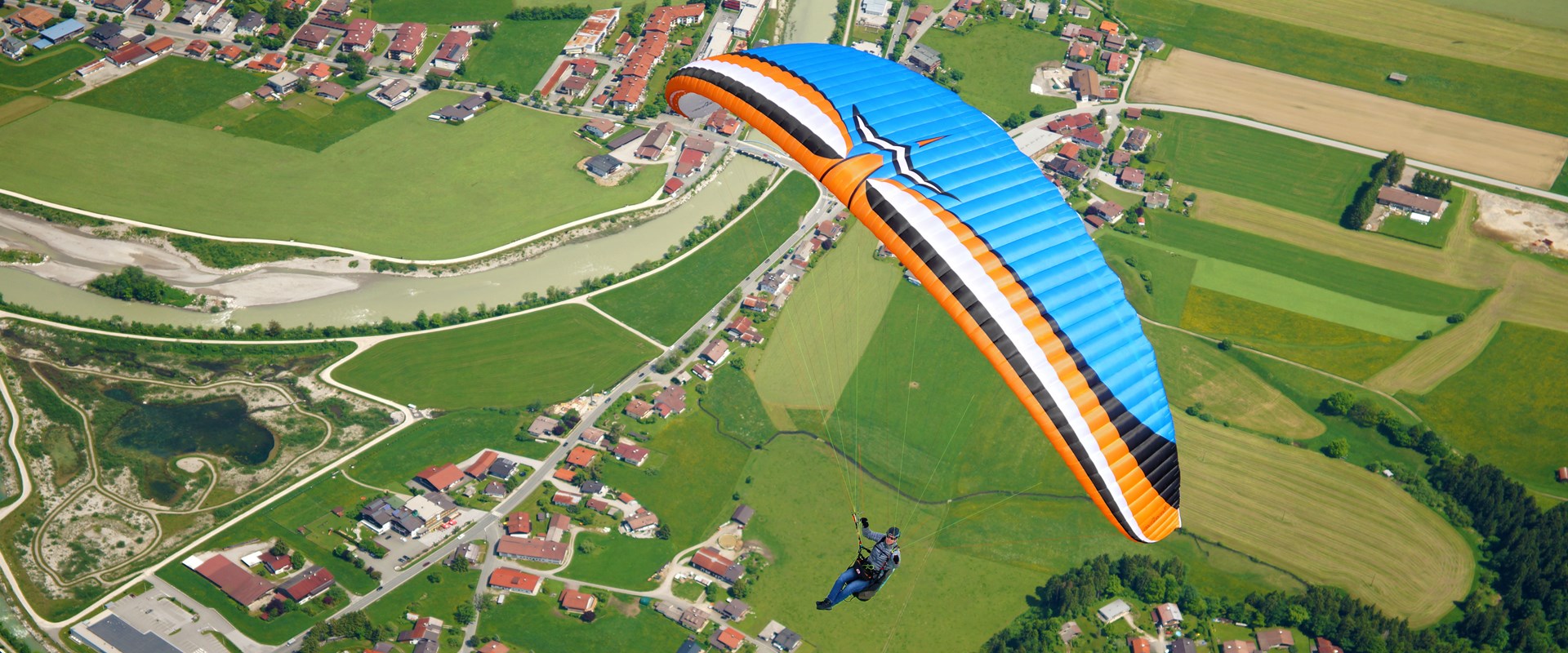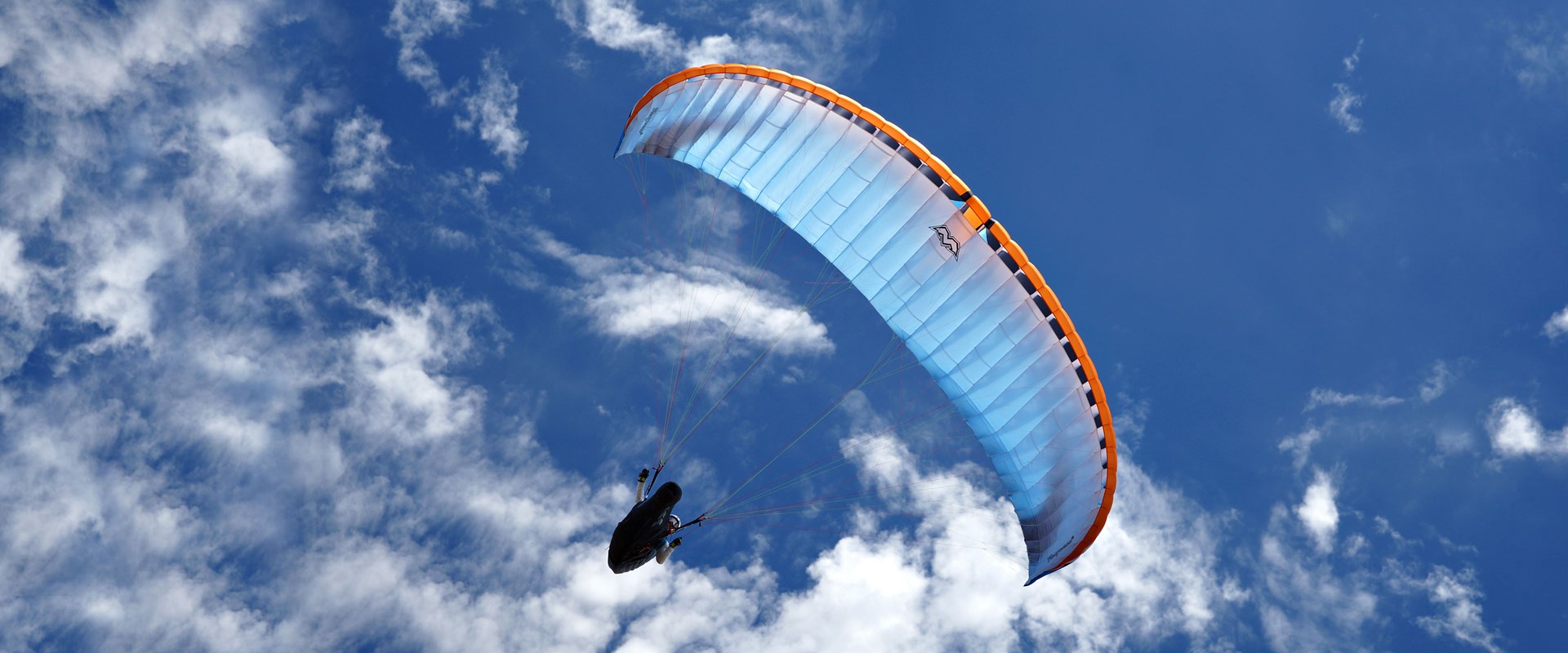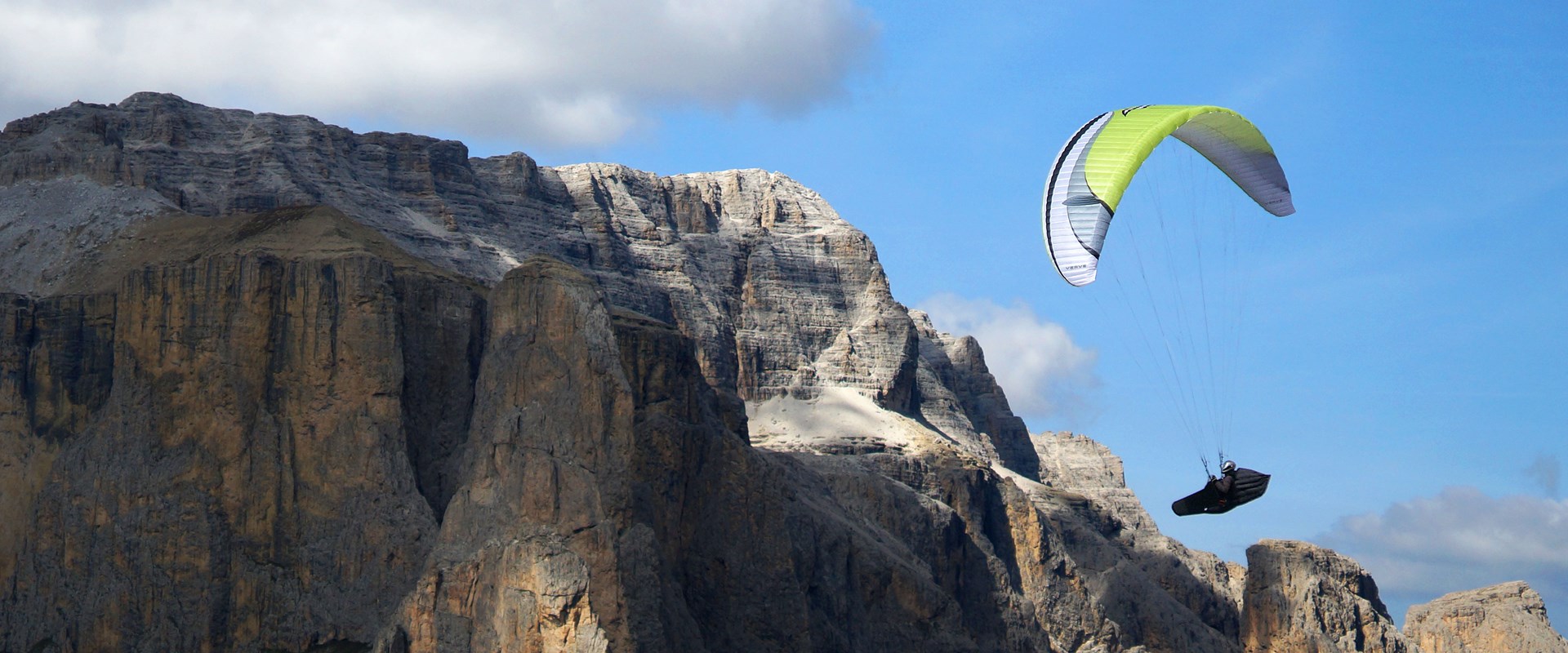
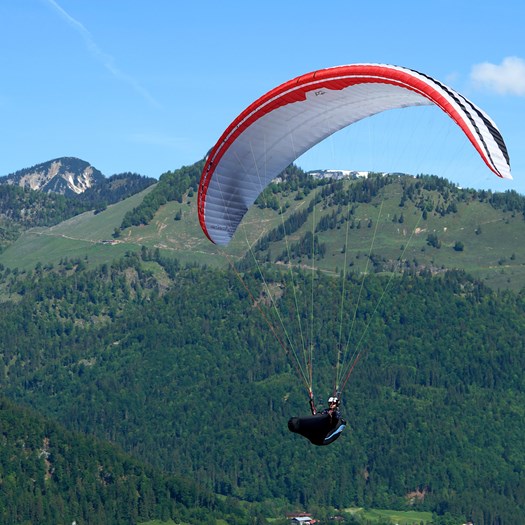
L’Envy 2 est une voile de performance parfaite pour la distance, et dotée d’un standard de sécurité exceptionnel. Dès son apparition, l’Envy 1 avait sérieusement monté la barre dans la catégorie des voiles dites DHV2, et l’Envy 2 vient poursuivre son ascension. Nous avons pu faire fructifier l’expérience acquise sur la série Magus en compétition pour l’exprimer dans la sécurité de ce modèle.
Nous avons défini un cahier des charges précis en élaborant les prototypes: performance, agilité, et lift en thermique se devaient d’être prioritaires pour cette aile performante. L’Envy 2 s’adresse en effet à deux catégories de pilotes: d’une part les pilotes de cross-country à la recherche d’une aile relax, et d’autre part à des pilotes progressant d’une voile intermédiaire vers une voile performante , sans excès d’agressivité. Les profils soigneusement choisis sont dégressifs en bout d’aile et donnent à l’aile une finesse excellente, tout en offrant une bonne stabilité à toutes les vitesses, notamment voile accélérée. C’est l’une des caractéristiques qui la rendent particulièrement séduisante par rapport à ses concurrentes.
Avec 5.74 d’allongement, la forme de l’aile est légèrement elliptique et la calotte comporte 56 cellules avec diagonales, dont l’épaisseur diminue vers le bout d’aile. Les renforts des nervures contribuent à la pureté du profil, et les ceux du bord d’attaque assurent la ligne du nez. Les ancrages des suspentes sont positionnés tous les 3 panneaux, ce qui permet d’économiser deux tiers de la longueur de totale du suspentage. Le cône de freinage est identique à celui de l’Envy 1. Le système de renforcement „flap „ au milieu de la voile et les pinces en bout d’aile permettent un pilotage précis et un tendance ascensionnelle remarquable en thermique.
Au gonflage, l’Envy 2 est brillante. Les pilotes Macpara sont habitués aux décollages et atterrissages de nos modèles, et l’Envy 2 ne déroge pas à la règle: tous les comportements attendus sont au rendez-vous, on peut compter sur ces caractéristiques sans surprise. Il ne serait pas inconvenant d’affirmer que les comportements de gonflage de l’Envy sont similaires à une voile classée en 1-2, malgré sont plus grand allongement. L’Envy est équipé d’élévateurs de 20mm, et d’un kit oreille „split A“, qui permet une fermeture progressive des stabilo, ainsi qu’une réouverture confortable et douce.
Dans les turbulences, la calotte résiste à la fermeture et ne réclame pas une présence marquée de la part du pilote, ceci dans toute l’échelle de charge alaire. La finesse a augmenté par rapport à l’Envy 1, et une fermeture provoquée à 40% ré-ouvre spontanément dans les 60°, sans rotation prononcée.
Le handling est précis, et la pression aux freins est assez légère pour favoriser de longs vols décontractés, tout en augmentant avec conséquence en bout de course afin de laisser une réserve suffisante de sécurité. En plus de ses belles performances son agilité, la voile est tempérée dans tous les axes. Elle ne shoote pas ni ne s’assoit. Le kit oreille, les aimants des freins avec leurs émerillons et les ouvertures velcro en bout d’aile pour la purge des salissures sont autant de détails à l’avantage des pilotes dont nous prenons soin !
L’usage de matériaux de premier choix ainsi qu’un soin particulier à chaque étape de fabrication sont associé aux développements informatiques 3d de notre programme « PG », et nous permettent l’aboutissement de produits de haute qualité, dont nous sommes fiers.
MacPara Envy 2 Review
MACPARA’S DESCRIPTION
The
Envy 2 is a high performance, cross-country glider with very high
safety and stability. The performance profits from the experience
gained in production of the Magus [competition] series.
BACKGROUND
MacPara
came into existence in the early nineties and have gradually grown over
the ensuing years to become one of the major brands in our sport. At
the helm from the start has been manager and designer, Peter Reček.
Over the last few years the company has enjoyed a large amount of
competition success with their Magus range and pilots such as Petra
Slivova, Tomas Brauner, Greg Blondeau, Yassen ‘big bird’ Savov and of
course the Valic brothers. MacPara have also gained several world
records with Nev Hulett’ current open distance record of 503 km set on
a Magus, as well as previous records from the Valics and women’s record
which was until a few weeks ago held by Petra.
The company are based
in the north east of the Czech Republic in the town of Roznov. The town
is close to flying sites on the Beskydy hills. Production is split
between the facility in Roznov and Gin’s production plants in Korea.
THE DESIGNER’S OWN WORDS
What were your aims when you were developing the Envy 2
We
enjoyed a lot of success with the original Envy and wanted to keep a
similar concept: an LTF2 glider with very high stability and sporty
handling. Of course we wanted to keep all the good features of its
predecessor such as the easy take-off characteristics, stability and
speed range.
One of our aims was to place it more in the middle of
the Eden 4 and Magus XC. To improve the glide, climbing performance and
speed we used the aerofoil profile from the Magus 6 in the central part
of the glider. As we have done with all our gliders since 2000 the
aerofoil profile varies in depth across the span. In all we made five
prototypes during its development.
What group of pilots is the Envy2 aimed at?
The
Envy 2 was made for cross country oriented pilots looking for relaxed
flying and for pilots progressing from intermediate gliders to expand
their skills.
What style of flying is the Envy 2 most suited to?
If
you are gentle on the controls it has very easy behaviour but if you
want to find its sporty side it offers nice dynamic handling allowing
you to easily master wingovers, SATs and spirals.
Where in the weight range should the Envy 2 be flown?
As
with the first Envy it can be flown anywhere in the weight range. Of
course like any glider it becomes more dynamic and fun when highly
loaded.
What will and existing Envy pilot notice if they try the Envy 2?
We
think they will notice improved climbing performance along with a
better accelerated glide. In our tests we found that when gliding at
30% bar with a faired harness it has similar performance to many
competition gliders, which is of course great for flying cross country.
The brakes are slightly heavier and the wing is more dynamic with a
little more feedback when entering and leaving thermals.
What are you most pleased about the new glider?
That it’s been well received by the pilots who have flown it and sales are good.
What’s next from MacPara?
We’re working on a new paramotor wing, the ‘MacJet’ with full reflex.
CONSTRUCTION
The
glider is a very clean with a classic elliptical design with an aspect
ratio that isn’t too radical at 5.74. It sports a variation on
MacPara’s distinctive livery that incorporates the ‘M’ logo. As with
many of the company’s wings it seems to use very little in the way of
trickery, you won’t find any pieces of plastic in the leading edge.
Peter once told me he likes to have all the tricks hidden under the
bonnet. However, one little trick that you’ll notice when you look at
the leading edge is small Mylar shapers sewn into the middle of the top
surface of each cell, to help improve the aerofoil shape in this area
as most of the lift is generated here. The canopy is made from Porcher
Skytex with 45 g/m2 cloth used on the leading edge and 40 g/m2 cloth
used further back.
The line layout is simple with three main lines
per riser, the a-risers are split, and only one bifurcation point. The
lines are Aramid Kevlar lines from Edelrid. The brake system uses rings
on the trailing edge to bunch the tips under breaking, MacPara also
have what they call a ‘reinforcement flap system’ in the centre of the
wing to stiffen that section of the wing.
The risers are very clean
and simple with no fuss. Split A’s make pulling big ears easy. The
brake handles are kept in place by metal magnetic keepers and have
swivels to stop brake lines getting twisted. The speed system utilises
the step down system found on some Gin and Advance gliders. This system
switches the speed system from 2:1 to 3:1 and means that the initial
push is light becoming harder as the system goes to 3:1, which lets you
know when you’re going into the second, less efficient, part of the
speed system – keep it for punching into strong headwinds or racing
between closely spaced strong thermals. Everything is finished to the
quality you would expect from a mainstream manufacturer.
The Envy 2
is available in five sizes covering all up weights from 65 kg up to a
massive 165 kg although the largest size is only available to special
order and has no certification. I chose to fly the Envy 2 28 right at
the top of its weight range with my Sup’Air Vampair harness and a
little lower in the range with a Sup’Air Evo XC harness. The glider was
delivered with the latest backpack from MacPara, which is well
constructed and comfortable, with three compression straps. As well as
the required manual the glider also came with a complete repair kit, a
T-shirt and even a mini multi-tool emblazoned with MacPara logos.
LAUNCHING
MacPara
can certainly tick off one of their targets with this glider; it has to
be one of the easiest LTF2 gliders to launch. Indeed it is no more
demanding than most 1-2s. While testing the wing I took off in varied
conditions from light thermic conditions to stronger breezes. In all
cases it behaved impeccably, rising smoothly with a gentle tug of the
risers and stopping overhead. Once there it felt very solid and easy to
control. For those moving up from lower class gliders this will make
the transition easy.
IN THE AIR
Once
you are airborne the first thing you will notice is how solid
everything feels; this wing carves through the air feeling secure and
unhurried. On entering thermals there is no aggressive pitching
movement, making for a very comfortable ride. The lack of pitching
means you can actively accelerate the wing into thermals before using
the energy that builds up in your first turn.
It is very easy to
control your turns with this wing. A short pull on the brake easily
puts the wing in a flat turn, with no tendency to stick at any point.
If you get a bit more aggressive with the brakes and add a bit of
weight shift the wing will get up on a wingtip when needed in small
punchy thermals. The handling is no more demanding than most 1-2s, but
this is of course an LTF2 glider so you should be experienced enough to
handle it. Feedback is on the subtle end of the scale with no
nervousness in the feel of the wing. It’s easy to feel where the best
is lift is through the brakes. I flew the wing a lot in Brazil during
the XCOpen and very quickly became so confident in the wing that I was
happy to thermal with one hand on the brakes and one on the camera.
Once
on glide it again feels very secure and there is no pitching so you can
get on with concentrating on where to find the next climb or switch the
brain off for a bit and relax. The bar is easy to use and the leading
edge stays solid throughout the range. The kickdown gives good feedback
of where you are in the range with the glide remaining efficient in the
first section. Flying with other wings of its class this wing felt like
it was on a par performance-wise.
DOWN TO EARTH
Despite
its comfort and ease of use this wing still has a fun side when you
want to come back down to earth. Wingovers and asymmetric spirals are
easy with the wing being forgiving of any timing errors. As with most
wings these days the landing is easy with a nice flare.
IN SUMMARY
The
Envy2 is a great wing for pilots moving up from an LTF1-2 glider, the
handling is no more demanding but you’ll get that extra dose of
performance. It is a great all rounder with good cross country
performance and a playful side you can discover should you wish.
THE REVIEWER
Marcus
King was flying the Envy 2 28 (88-110 kg) and an all up weight of 109kg
with a Sup’Air Vampair harness and at 106kg with a Sup’Air Evo XC
harness.
WE LIKE MOST
The easy handling and security
WE WOULD RECOMMEND IT TO
Cross
country pilots moving up from an LTF1-2 or those flying in places where
they don’t want to have to worry about the glider at all and just get
on with flying and enjoying the experience.
Cross Coutry ( January - February 2010)